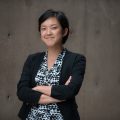
“A rich family’s child has to choose one of three options,”says Fuye Wang managing partner at Geek House Capital. “Work in a large company, invest, or inherit the family business.”
Mr. Wang is an example of China’s ‘second generation rich’. His father, Zhongjun Wang, is the founder of Huayi Brothers, one of the largest private-sector film companies in China. Huayi Brothers is backed by Alibaba, Tencent, and CITIC, a state-owned investment company.
Instead inheriting his father’s business, Mr. Wang decided to take the second option. “I’m too lazy and I know that I can not work hard, so I got into the investment field,” he jokes.
China’s second generation rich have a reputation for extravagance. But how do they see themselves as entrepreneurs?
“There are bad examples of [Chinese “second-generation rich”], but there are good examples, too,” says Lili Luo, founder of TriBeluga.
Ms. Luo is also a wealthy second generation entrepreneur. Her parents run a business that involves various residential and tourism property development projects.
“During my first presentation at my parent’s company, I said that we needed change and improvement, just like President Obama in his speeches. Company executives were quite shocked by my idea,” she says.
The more senior executives of her parent’s company wouldn’t trust her, they thought she was just another second generation rich kid. However, Ms. Luo now recalls it as a valuable experience. “These challenges ultimately helped me grow. Being aware of misunderstandings and cultural differences help me better understand others.”
Ms. Luo started her own business last year. She is the founder of Tribeluga, a Chinese incubator that helps foreign startups expand to China by leveraging global networks. Based in Seoul, Tribeluga mainly focuses on three areas: environment, health care, and education. So far, the incubator has invested in two startups: VTouch, a remote touch interface solution provider, and N.thing, which makes internet connected smart pots.
“Other countries still think of China as ‘made in China’. The future will be ‘make for China’,” Ms. Luo says. “China is a full 20% of the world’s population. Any decision, values, or views that we [China] hold will have significant implications for the world.”
Xianming Zhang’s father Yue Zhang is the founder and CEO of Broad Group, which is currently building a 220-story building, the tallest in the world.
The tower or the ‘Sky City‘ will hold schools, a hospital, 17 helipads, and some 30,000 people, according to Mr. Zhang.
“My dad’s inspiration comes from his imagination and an attempt to build sky cities,” Mr. Zhang says.
Inspired by his father, Mr. Zhang founded a Spatial Research Lab called P8 in Changsha, China. P8 aims to change the horizontal structure of cities by creating vertical living spaces that connect people and communities more easily within the space.
“I wanted to create a vertical community based on the ‘Sky City’ concept. I believe that collaborative making, living, and working is the future,” says Mr. Zhang. The eight-story building is also committed to embracing entrepreneurs, makers, and students who want to explore the maker community in Changsha.
Image Credit: TechNode